Launching an iGaming product in Argentina isn't just about securing the right licence or translating your platform. Payments are often where operators discover whether they're truly ready for the market.
Player expectations have shifted quickly over the past few years. Digital wallets, instant transfers and mobile-first payment experiences now play a much bigger role than traditional card payments. Deposits are expected to go through in seconds, while withdrawals need to feel just as smooth. Even small delays or unnecessary steps can reduce conversion and discourage players from returning.
Success doesn't come from offering the longest list of payment methods. It comes from supporting the options Argentine players already use in their everyday lives.
If you've read our guide to iGaming Payment Methods in India, you'll recognise a familiar pattern. Every market develops its own payment habits, and building around local behaviour consistently delivers better results than relying on a standard global payment stack.
Understanding Argentina's Payment Landscape
Argentina's payment market has changed rapidly. Digital wallets have become part of everyday commerce, while instant account-to-account transfers and interoperable QR payments are replacing many traditional payment flows.
A major driver of this shift has been Transferencias 3.0, introduced by the Central Bank of Argentina (BCRA). The initiative allows instant transfers between bank accounts and virtual wallets while supporting interoperable QR payments across participating providers.
For operators, the takeaway is straightforward.
Players don't compare your payment experience with another casino. They compare it with the apps they already use every day to shop, pay bills or transfer money. If making a deposit feels slower or more complicated than those services, friction appears immediately.
The Payment Methods That Matter Most
Digital Wallets
Digital wallets now sit at the centre of Argentina's payment ecosystem.
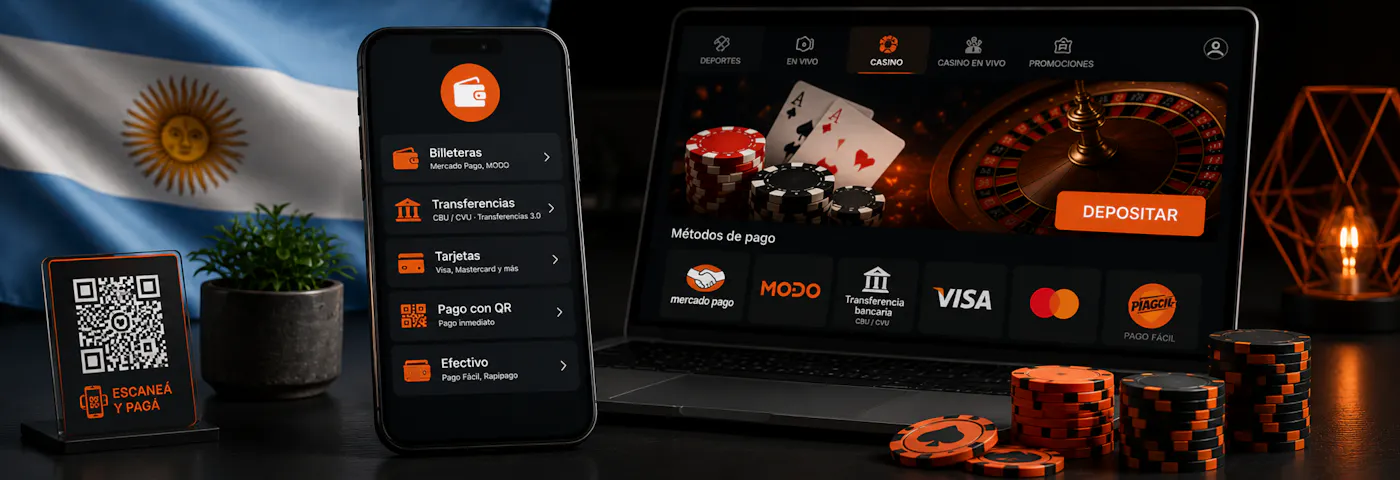
Mercado Pago remains one of the country's best-known payment platforms, combining wallet balances, payment cards, prepaid products and access to local payment infrastructure.
Another important player is MODO, the banking sector's own digital wallet, which has gained traction among users who prefer paying directly from their bank accounts.
For operators, wallets offer several practical advantages:
- faster deposits;
- a familiar checkout experience;
- strong mobile adoption;
- fewer interruptions during payment.
That doesn't automatically translate into higher approval rates, though. A popular wallet still depends on stable integrations, reliable routing and the quality of the payment infrastructure behind it.
Instant Bank Transfers
Bank transfers are no longer associated with slow settlement times.
Thanks to Transferencias 3.0, payments between bank accounts (CBU) and virtual wallet accounts (CVU) can be completed almost instantly, including QR-based transactions supported by participating institutions.
For iGaming operators, that changes how bank transfers should be viewed. They're no longer a backup option but a practical payment method that offers:
- instant deposits;
- broad customer coverage;
- lower processing costs in many scenarios;
- compatibility with both banking apps and digital wallets.
Debit and Credit Cards
Cards continue to play an important role, even if they no longer dominate online payments.
Visa, Mastercard and domestic card products remain widely used, particularly for larger deposits or by players who simply prefer paying with a familiar card. Providers such as Mercado Pago also support both local and international card payments alongside alternative payment methods.
Cards still deserve a place in any payment mix. They simply work better when combined with local payment options rather than replacing them.
Cash-Based Payment Options
Cash usage continues to decline, but it hasn't disappeared.
Networks such as Pago Fácil and Rapipago are still supported through several payment providers and remain relevant for parts of the population that continue to rely on cash-assisted payments.
Whether these methods make sense depends largely on the audience an operator is targeting. For some businesses they'll represent only a small share of deposits, while for others they remain worth supporting.
Choosing Payment Methods That Actually Improve Performance
Adding more payment methods doesn't automatically increase conversion.
Operators usually achieve better results by improving the payment experience around the methods players already trust.
Before integrating another provider, it's worth asking a few practical questions:
- How quickly are deposits confirmed?
- Can players use the same method for withdrawals?
- Is local acquiring available?
- What happens if the primary payment route becomes unavailable?
- Does the payment flow work smoothly on mobile devices?
These questions reveal far more about payment quality than the total number of logos displayed on a cashier page.
Local Payment Coverage Matters More Than Quantity
International operators sometimes assume that offering every available payment option gives players more flexibility.
In reality, most people stick with the payment method they already know.
In Argentina, that usually means:
- digital wallets;
- instant bank transfers;
- familiar local card products.
Supporting those methods consistently tends to produce better results than filling a cashier with international alternatives that local players rarely use.
We highlighted a similar pattern in our article Why Gambling Transactions Get Declined in Bangladesh. Payment failures are often linked to routing, local banking relationships or transaction monitoring rather than the payment method itself.
Argentina is no different. The technology behind the payment journey often matters just as much as the payment option a player selects.
Building a Payment Strategy for Long-Term Growth
Payment infrastructure shouldn't be treated as something that's configured once and forgotten.
Player behaviour changes, payment products evolve and local preferences shift over time. Operators that regularly review their payment performance are usually the first to spot problems before they begin affecting revenue.
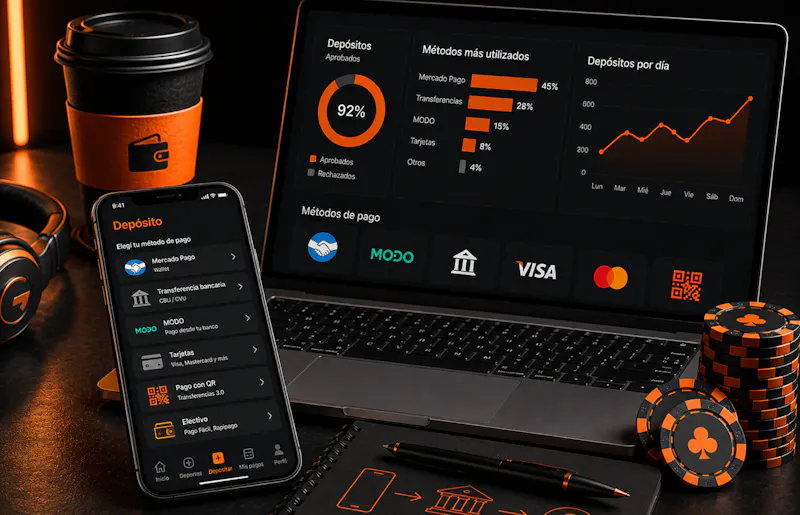
Instead of counting available payment methods, it's more useful to monitor metrics such as:
- approval rates;
- failed deposits;
- withdrawal speed;
- mobile conversion;
- wallet adoption;
- payment preferences across different player segments.
Those numbers provide a much clearer picture of how well a payment strategy is performing.
Conclusion
Argentina's payment market continues to evolve, and player expectations are evolving with it.
Today, successful operators aren't necessarily the ones offering the largest number of payment methods. They're the ones whose payment experience feels familiar from the first deposit to the final withdrawal.
For businesses expanding into Argentina, that means focusing on trusted local payment options, dependable infrastructure and a checkout flow that removes friction instead of adding it. When payments feel effortless, players spend less time thinking about how to pay—and more time engaging with the platform.